hale
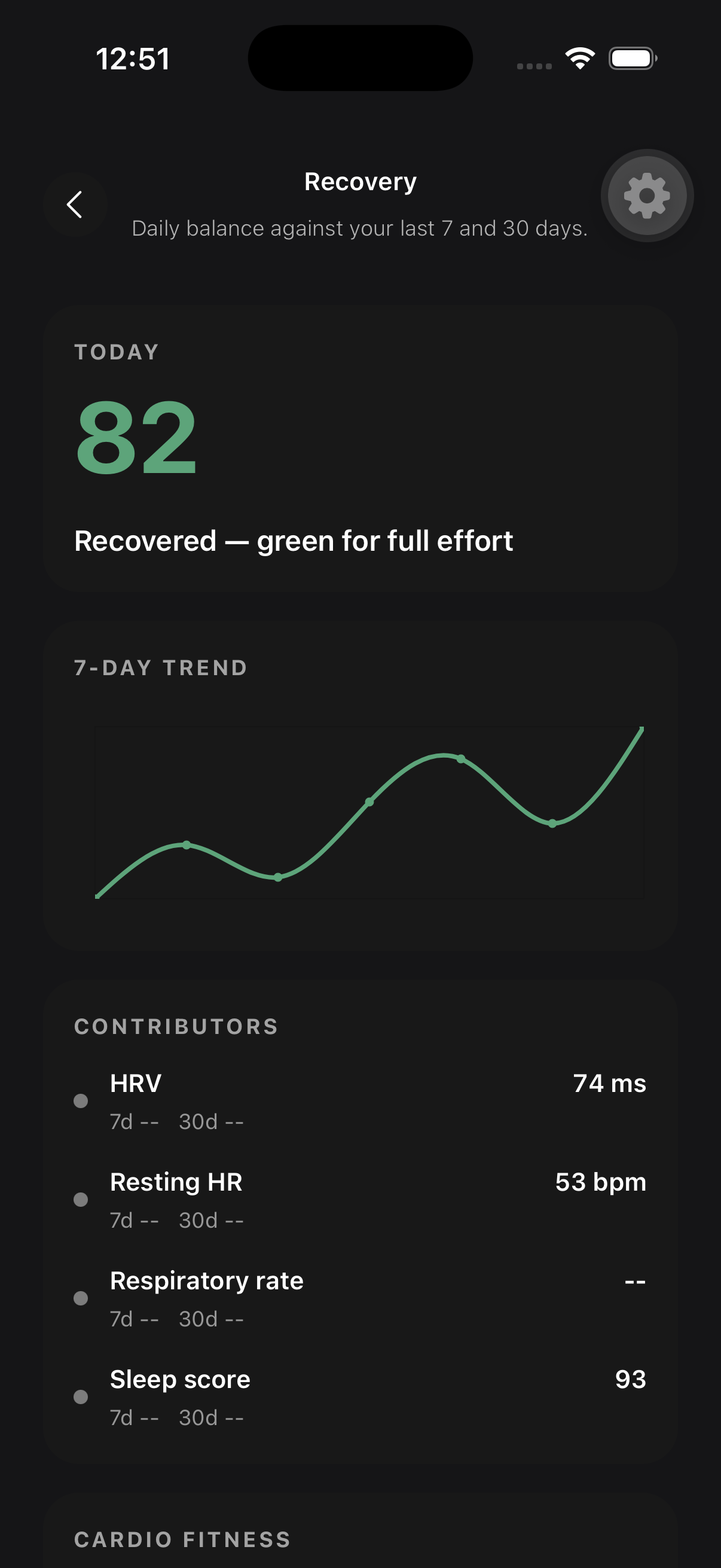
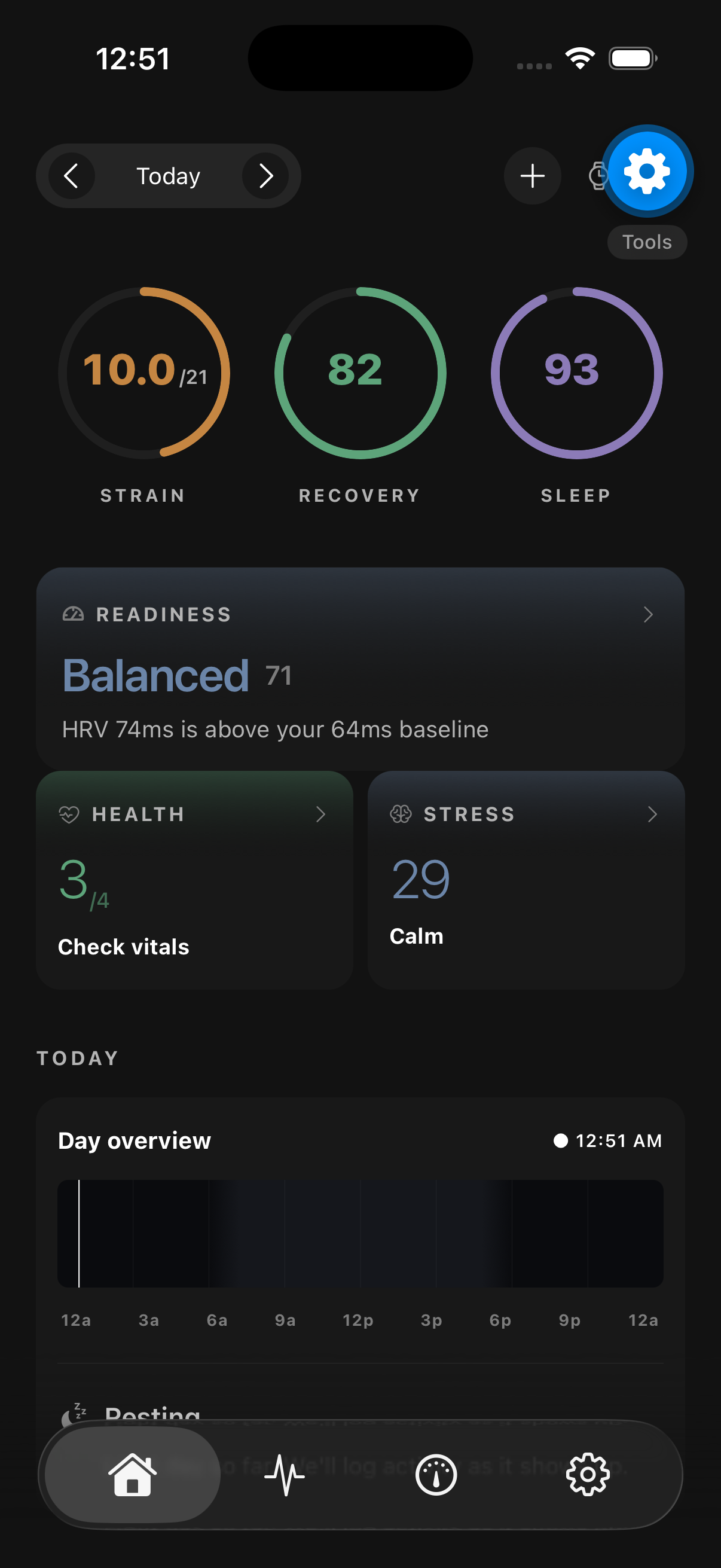
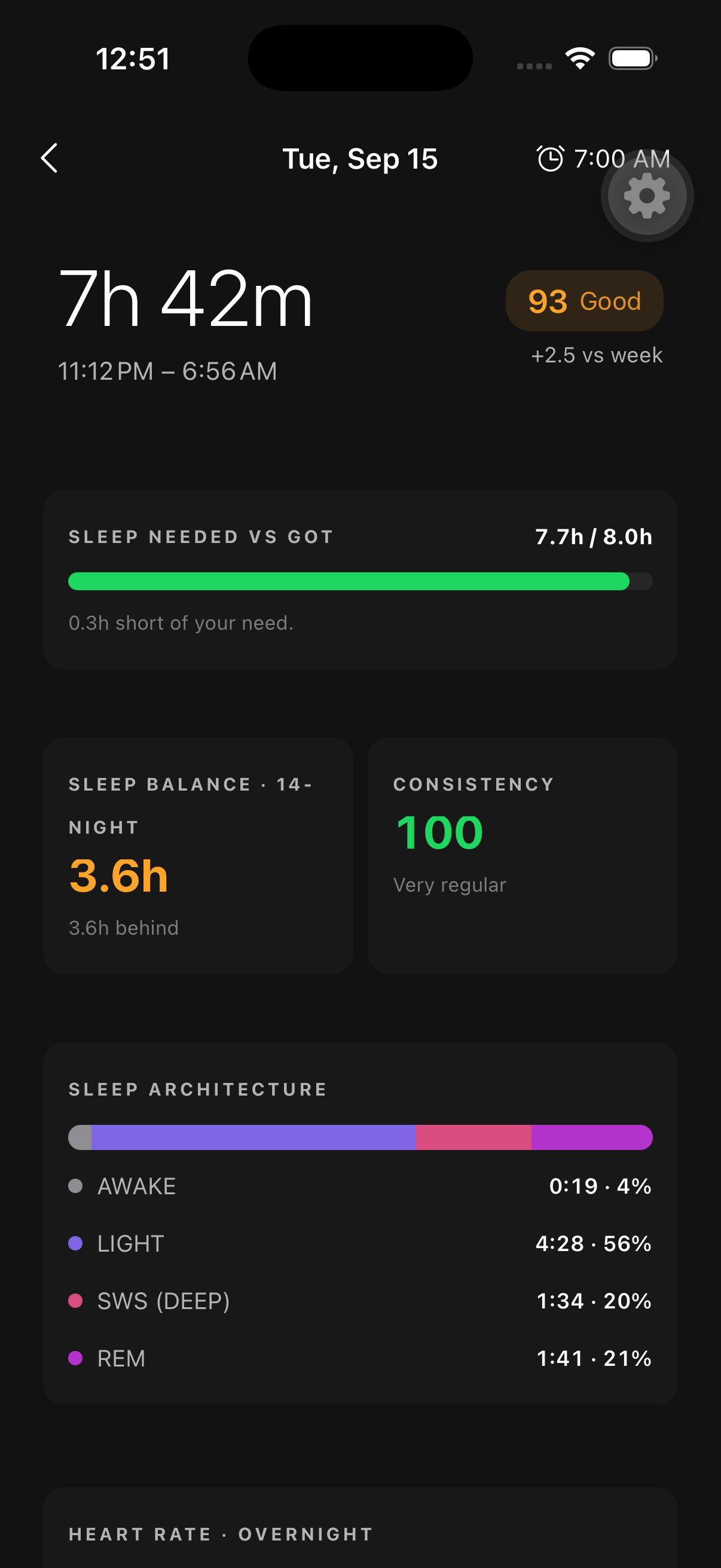
Local-first WHOOP 4.0 tracker. Reads the strap over BLE and computes recovery on-device in Rust — no cloud, no account.
- Status
- In progress
- Year
- 2026
- Role
- · Everything
- Rust
- React Native
- Expo
- UniFFI
- SQLite
- Turborepo
The problem
A fitness strap measures your body continuously and then requires a subscription and a round trip to someone else's server to tell you what it found. The sensor is on your wrist; the data is not yours.
hale is the same hardware with the cloud removed.
The approach
The app talks to the strap directly over Bluetooth, ingests raw sensor records, and stores them in SQLite on the phone. A Rust compute engine — sleep detection, activity detection, sleep staging, wellness and derived metrics — runs on the device via a native module, so recovery and strain are computed locally and never leave it.
Backup follows the same principle: the OS's own backup covers derived data, while raw records stay device-local and are recomputable from scratch. There is no account, because there's nothing to have an account with.
It's a small pnpm and Turborepo workspace: an Expo app, and the Rust crate it links.
The hard part
Reading a device that doesn't want to be read. This is clean-room interoperability work — ingesting and decoding a sensor stream from hardware you own, with no vendor documentation to lean on. Most of the effort is in that decode, and it's the part that breaks when firmware changes.
Getting Rust onto a phone properly. The compute engine is compiled through UniFFI into a native module the React Native app links directly, rather than reimplementing the physiology in JavaScript or shipping it to a server. That's the decision that makes "on-device" true rather than marketing. The cost is a real build pipeline: the iOS bindings and a roughly 44MB static framework are generated artifacts, deliberately not committed, so a first build has a step you can't skip.
Where it stands
Working and in development. It is explicitly not affiliated with WHOOP — an independent interoperability project for hardware you own, and the repo says so up front.